Chalciporus piperatus
Common Name: Peppery Bolete
Synonym: Boletus piperatus Fries
Pileus
Cap 2-7 cm broad, convex, becoming broadly convex, nearly plane in age; margin at first slightly incurved, then decurved, occasionally wavy at maturity; surface sticky when moist, soon dry, smooth to matted tomentose or faintly fibrillose, especially at the margin; color: rusty-brown to vinaceous-brown over a yellowish-brown background, fading in age to ochraceous-brown; flesh moderately thick, yellowish-buff, darkening to cinnamon-brown when injured; odor harsh, similar to Suillus pungens; taste peppery.
Hymenophore
Pores very fine when young, 1-2/mm at maturity, angular, rusty to vinaceous-brown, cinnamon-brown in age, darkening slightly when bruised; tubes 3-7 mm long, dull yellow-brown to cinnamon-brown, adnate to depressed in attachment, usually running a short distance down the stipe.
Stipe
Stipe 2-4 cm long, 0.5-2 cm thick, solid, slender, straight, equal or tapering slightly at the base; surface colored like the cap, i.e. tinged vinaceous to cinnamon brown over a yellowish ground color, the base entirely yellow with adhering yellow mycelium; flesh buff-brown except yellow at the base, darkening slightly when injured; veil absent.
Spores
Spores 6.5-10 x 3-4 µm, smooth, subfusoid (spindle-shaped); spore print brown.
Habitat
Solitary to scattered under pines; fruiting in late summer from fog drip or in watered areas, also after the fall rains.
Edibility
Caution advised; untried locally. The peppery taste is said to disappear when cooked.
Comments
Chalciporus piperatus is one our smallest and least common boletes. In our area it's associated with pines, especially Monterey pine (Pinus radiata), often fruiting at the same time as Boletus edulis, but like the latter seldom in large numbers. It is characterized by a rusty-brown to vinaceous-brown cap which fades to dull yellow-brown and a leggy stipe colored like the cap except for a yellow base and adhering yellow mycelium. As the species name implies, it has a distinctly peppery taste.
|
.jpg "Chalciporus piperatus")
.jpg "Catathelasma imperiale")
.jpg "Pluteus atromarginatus")
.jpg "Kuehneromyces vernalis")
.jpg "Coltricia cinnamomea")
.jpg "Calvatia cyathiformis f. fragilis")
.jpg "Fairy Ring Mushroom: Marasmius oreades")
.jpg "Calvatia fumosa: Handkea fumosa")
.jpg "Coprinellus micaceus")
.jpg "Boletus piperatus: Chalciporus piperatus")
.jpg "Lactarius rubrilacteus")
.jpg "Schizophyllum commune")
.jpg "Trappea darkeri")
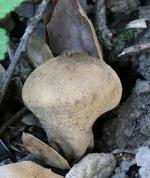
.jpg "Boletus mirabilis")
.jpg "Phaeocollybia kauffmanii")
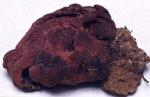
.jpg "Chalciporus piperatus")
.jpg "Calbovista subsculpta")
.jpg "Inocybe corydalina")
.jpg "Hygrophorus bakerensis")
.jpg "Cannon Fungus: Sphaerobolus stellatus")
.jpg "Dacrymyces stillatus")
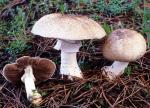
.jpg "Thelephora terrestris")